The Power of Imagination
It has been said that, ‘Imagination is more important than knowledge.’- Albert Einstein. This quote implies that what is already known or manifested is valuable and useful yet limited by how this knowledge may impact ideas and concepts not yet contemplated or experienced. The Power of Imagination and Arts Integration allows participants to identify and demonstrate ‘What If?’
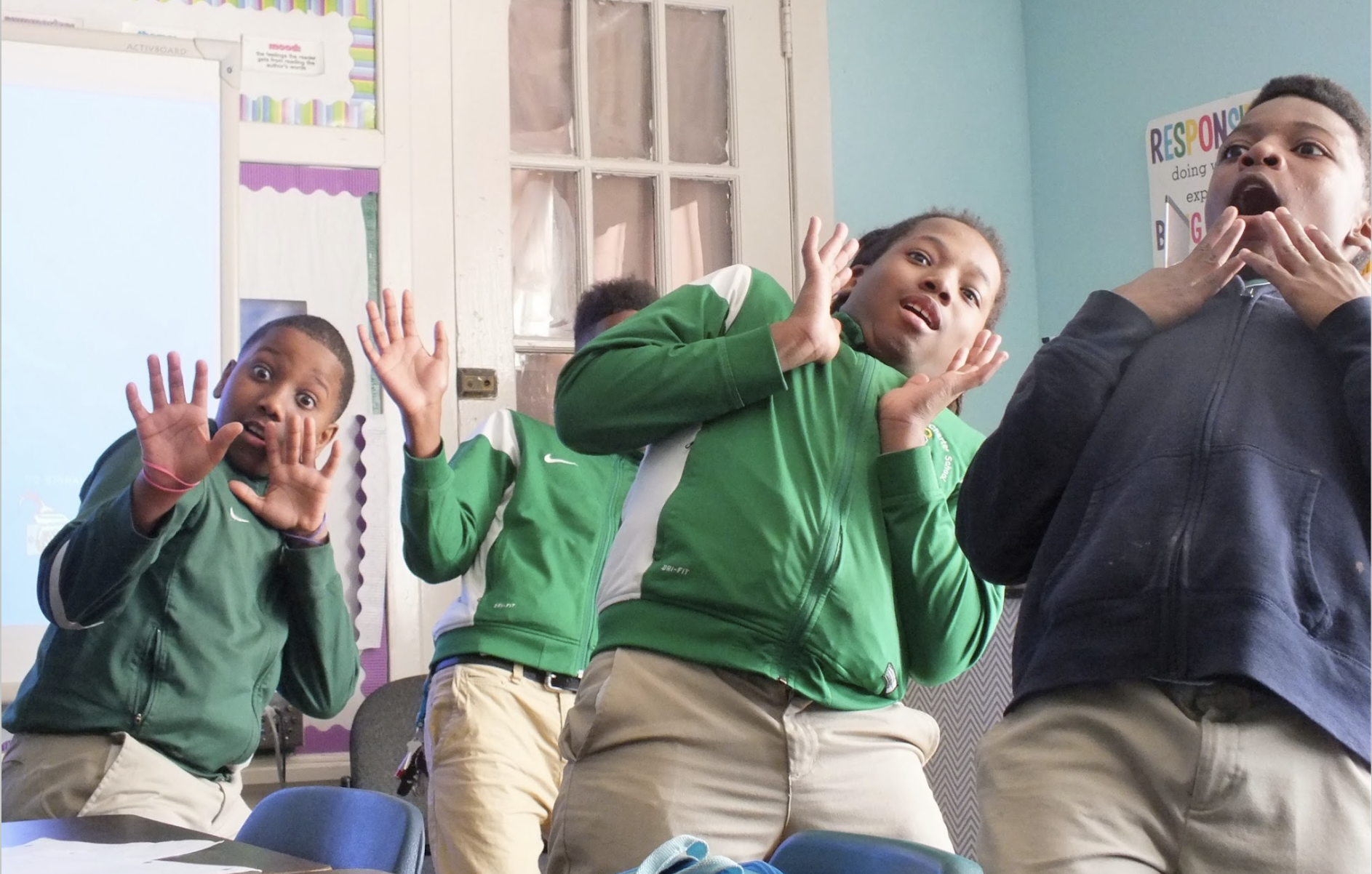
In KID smART Arts Integration classrooms students and teachers are encouraged to use their imagination to achieve learning objectives through an artform. Whether it is utilizing elements of collage to determine fraction values, role-play to speak from the point of view of the main character, or movement/dance to identify the impact gravity has on the solar system.
The American Association of Theatre for Youth defines Creative Dramatics as “an improvisational, non-exhibitional, process-centered form of drama in which participants are guided by a leader to imagine, enact and reflect upon human experience”. The attached images show part of the process students are engaged in during a Creative Dramatics session.
The classroom teacher (CT) leads a discussion about what makes ‘a good citizen’? The discussion included rights, responsibilities, family members, and community. The teaching artist (TA) builds students' knowledge about ‘what is role-play?’ The TA defines and models role-play as ‘to imagine a role, position, title, job, or attitude other than your own’. Students are asked to ‘pretend’ to be citizens of a ‘make believe’ town called Alphabet City. Students were asked to create name tags out of index cards and yarn to wear as a device to transport themselves to Alphabet City. After building their knowledge the TA declares ‘it’s time to go into the drama!’
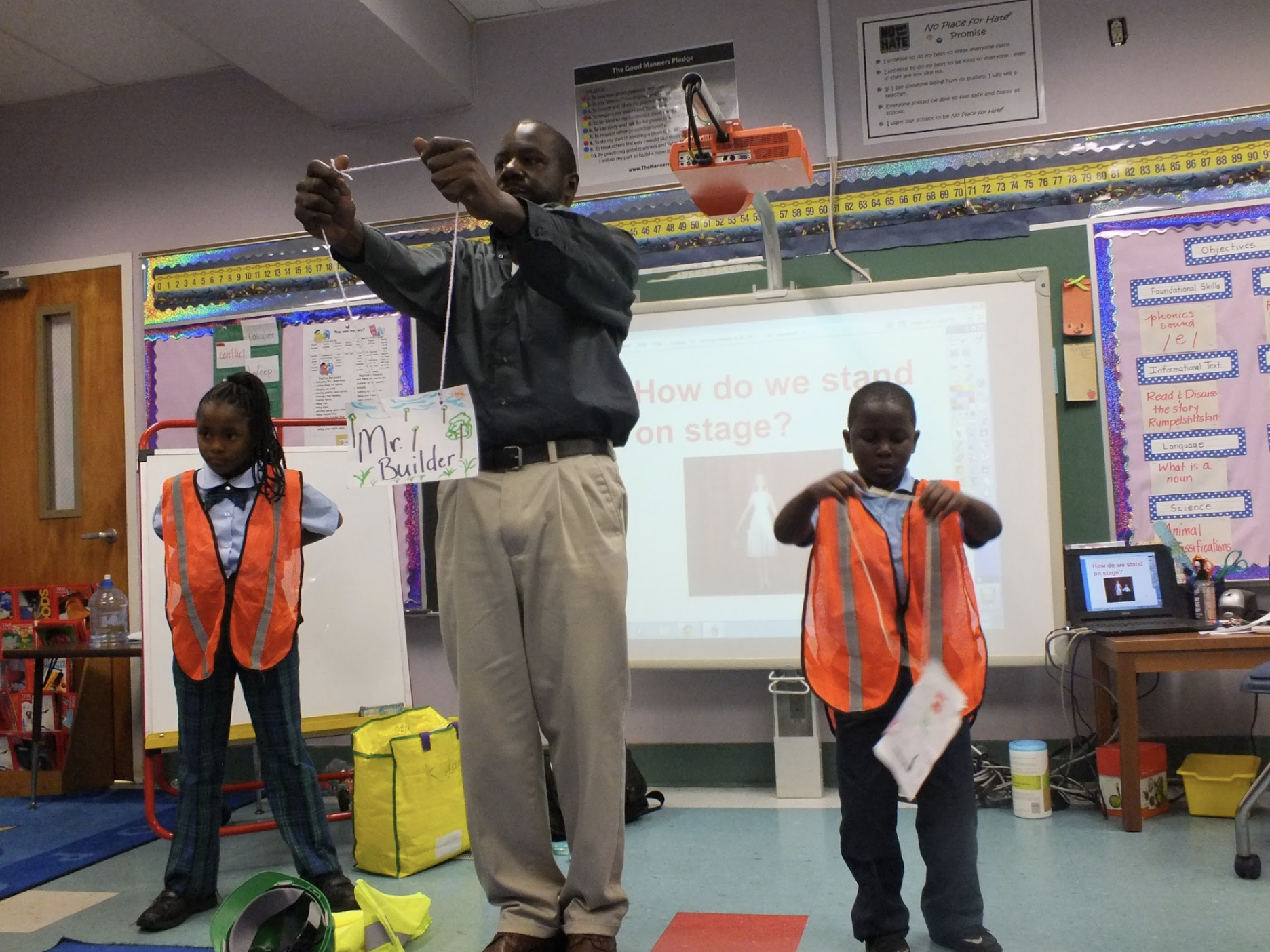
The TA and CT narrate the guided drama by asking students to slowly put on their name tags, close their eyes, and count backwards from five. The TA clapped their hands and welcomed students to Alphabet City. The TA is in-role of Mr. Builder wearing a construction hat and vest. The students are in-role as citizens. Mr. Builder tells the ‘citizens’ he has been asked by ‘The Leader’ (played by the CT) to create a community. While in-role students share their ideas about what should happen within this community. What are some of their wants and needs, what buildings and businesses should be created, how should citizens interact/behave with each other? At a pivotal moment during the session the TA exclaims ‘FREEZE!’ and students are told it’s time to leave Alphabet City. Students and teachers de-role (leave the drama) by closing their eyes and removing their name tags returning to the classroom. TA and CT debrief and process their experience(s). What happened? What stood out for you? How did it feel? ‘So what? Now what?’ The ‘drama’ is episodic and highlights weekly learning goals about citizenship, community, and role-play during the Arts Integration residency (once a week for 6-10 weeks).
Students feel increasingly empowered, confident, and cooperative after each session and are reluctant to de-role. Teachers are excited about how well students retain information, and express themselves creatively. The group dynamic is positively impacted by contemplating what will or should happen next ‘in the drama’.
The Power of Imagination affords students and teachers the opportunity to feel, witness, and create new ideas not present or available to them. ‘What if students were asked to assume the rights and responsibilities of creating their own community?’ When learners are encouraged to employ what they already know and allow what they would like to have happen, The Power of Imagination becomes an invaluable tool for problem-solving, critical thinking, and joyful learning.