Experimenting Alongside Students: Exploring art forms outside of your skill set in the classroom
ISL Uptown 4th Grade - Social Studies & Visual Art
Emily Chiarizio
“We’re learning about ancient civilizations; could the students make replicas of artifacts?” This was the ask from my new co-teachers at our first co-planning session for their four social studies classes. I felt a tug of anxiety in my chest and thought silently to myself, “How can I steer them towards drawing artifacts instead?” I have years of experience creating and teaching young people drawing, painting, collaging, and photography, but despite some sculptural experience both personally and instructionally, I have never felt very comfortable making three-dimensional art, especially with clay.
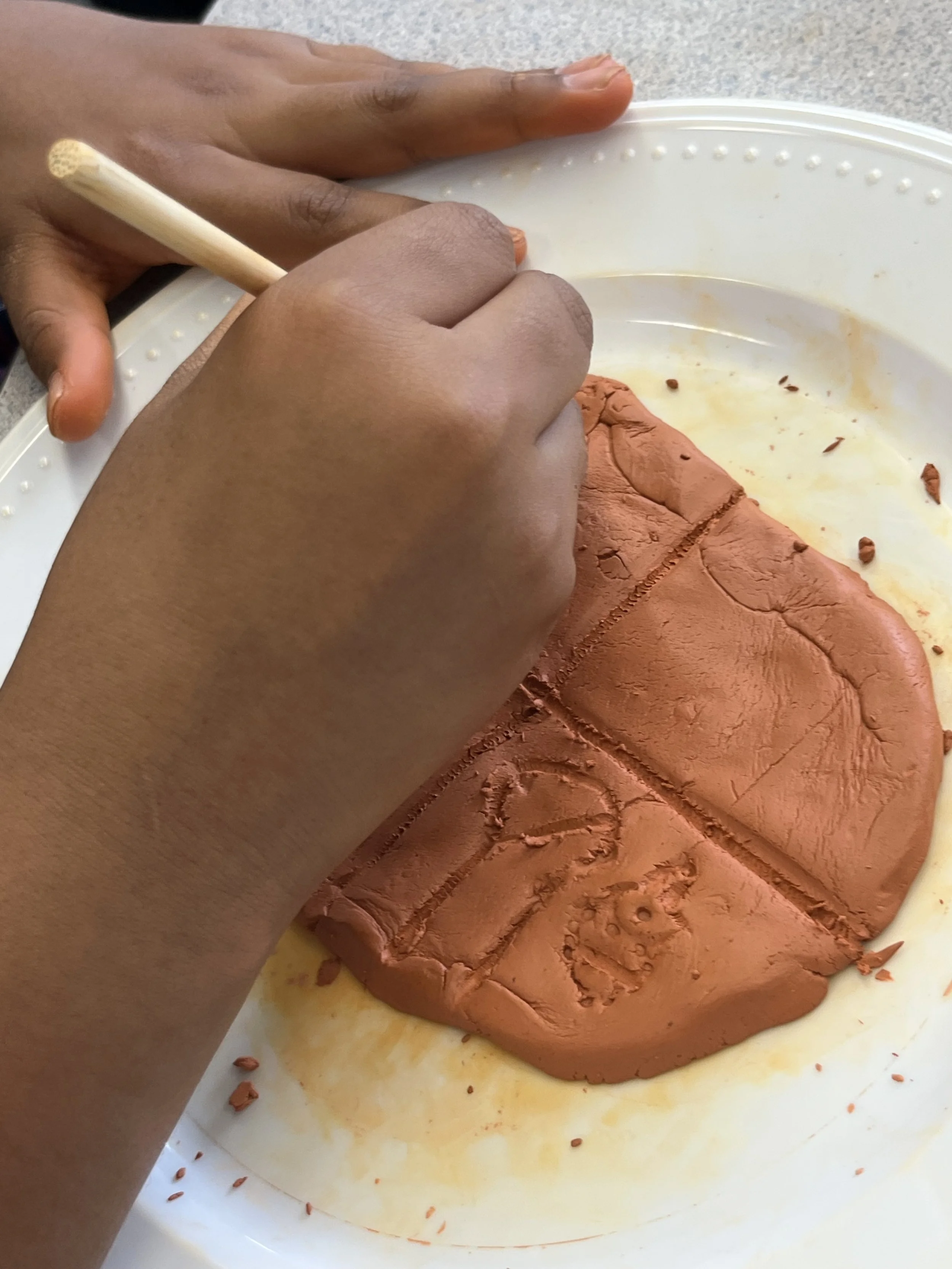
Arts integration clay pictograph project by an ISL Uptown student.
Fortunately, there was some time between that planning session in which I was able to consider the logistics of working with clay with 72 students and how powerful it would be to integrate a clay pictograph project into their study of Mesopotamia culture and cuneiform tablets. Here’s what I learned:
You do not have to be an expert in an artform to use it in your classroom. I would never teach a ceramics class, I do not have the skills, knowledge, or desire. But I can approach an unfamiliar material and learn the basics ahead of time (youtube tutorials and blog posts abound!), plan out the logistics (dividing up clay, gathering the necessary tools, trying out the materials) and then get ready to experiment and learn alongside my students.
Using unfamiliar art materials not only builds visual art skill sets, but it also gives me the opportunity to model for my students what learning a new skill looks and feels like. So often students feel nervous trying something new, and by sharing my own discomfort with them as we work with new materials, students are able to see how to work through that uncomfortableness rather than be paralyzed by it. I want students to experience that the doing is where the learning happens, not in creating a perfect, finished product.
Some students have more experience than I do with certain mediums, and that’s okay! The cuneiform tablet project was very specific: I carefully planned daily lessons that spanned several weeks, but I also allowed space for students to share their knowledge when it came time to work with the clay. We even compiled a list of tips as we worked that I could share with other classes doing the same project.
When possible, follow your students’ interests. In my four years of working as a teaching artist, sculpture is the most requested visual art form by students. While I may not feel completely comfortable with clay and other 3D artmaking, if it gets students excited to learn about social studies, I can be a little uncomfortable with an unfamiliar material.
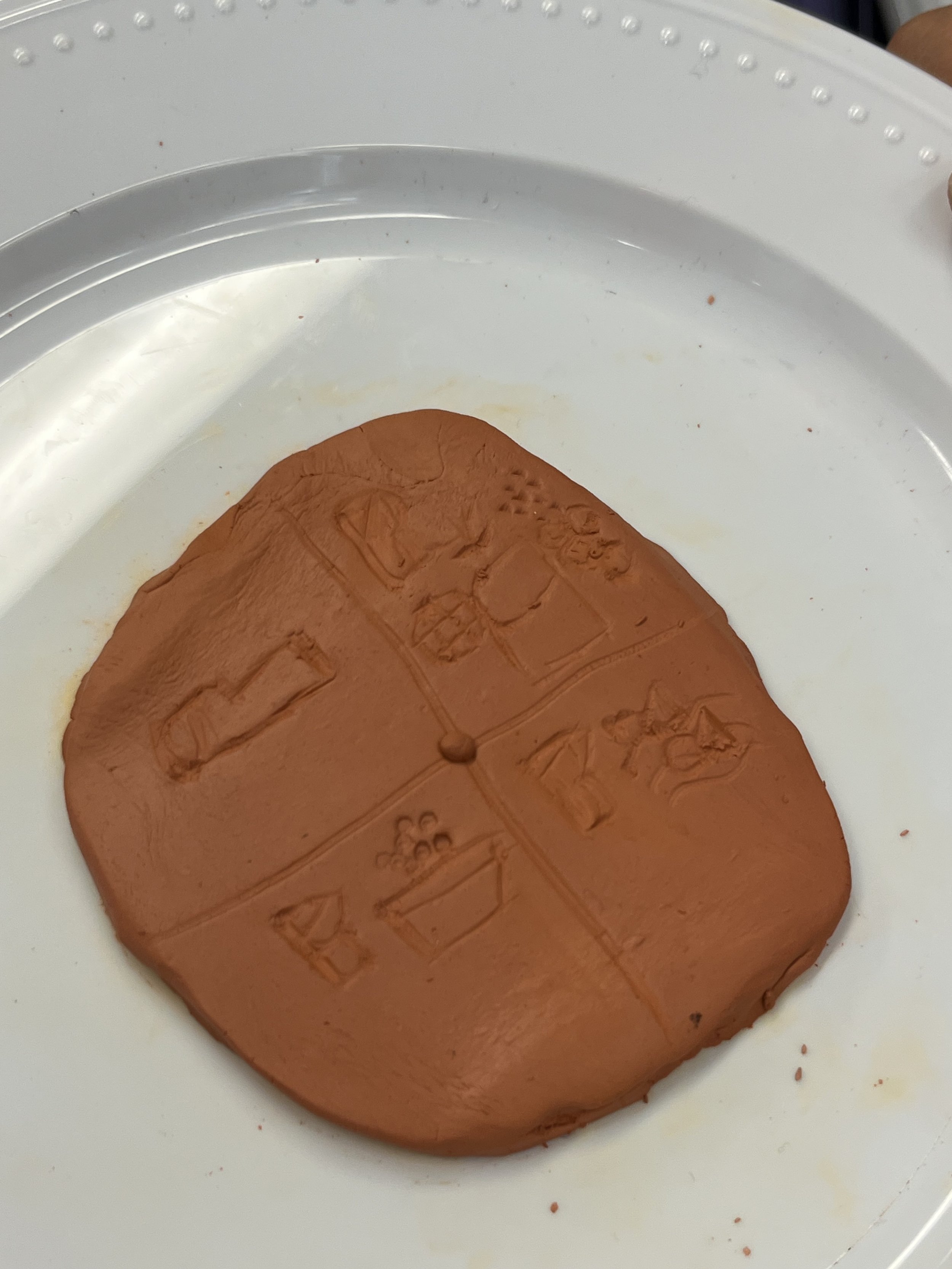
Completed pictograph.
The tablets were a hit; engagement and completion of the project with all classes was 100%! The students and I all now know a little more about working with air dry clay, symbols and early written language in Mesopotamia, and importantly for myself, that I can press myself as an educator to do challenging activities that increase my students’ learning and joy.