Getting Into the Story: Creating Zines, Comics, and Accordion Books
Audubon Uptown, 3rd Grade | Social Studies, French Immersion & Visual Art
Ms. Emily and Madame Emily
Retell and sequencing is a major part of comprehension across subject areas. Providing students the opportunity to create their own visual representation of fictional stories, historical events, or scientific and mathematical procedures allows them to deepen their understanding of the content. Bringing comic, zine, and art book making into lessons can be an engaging, empowering, and fun way to work on these skills.
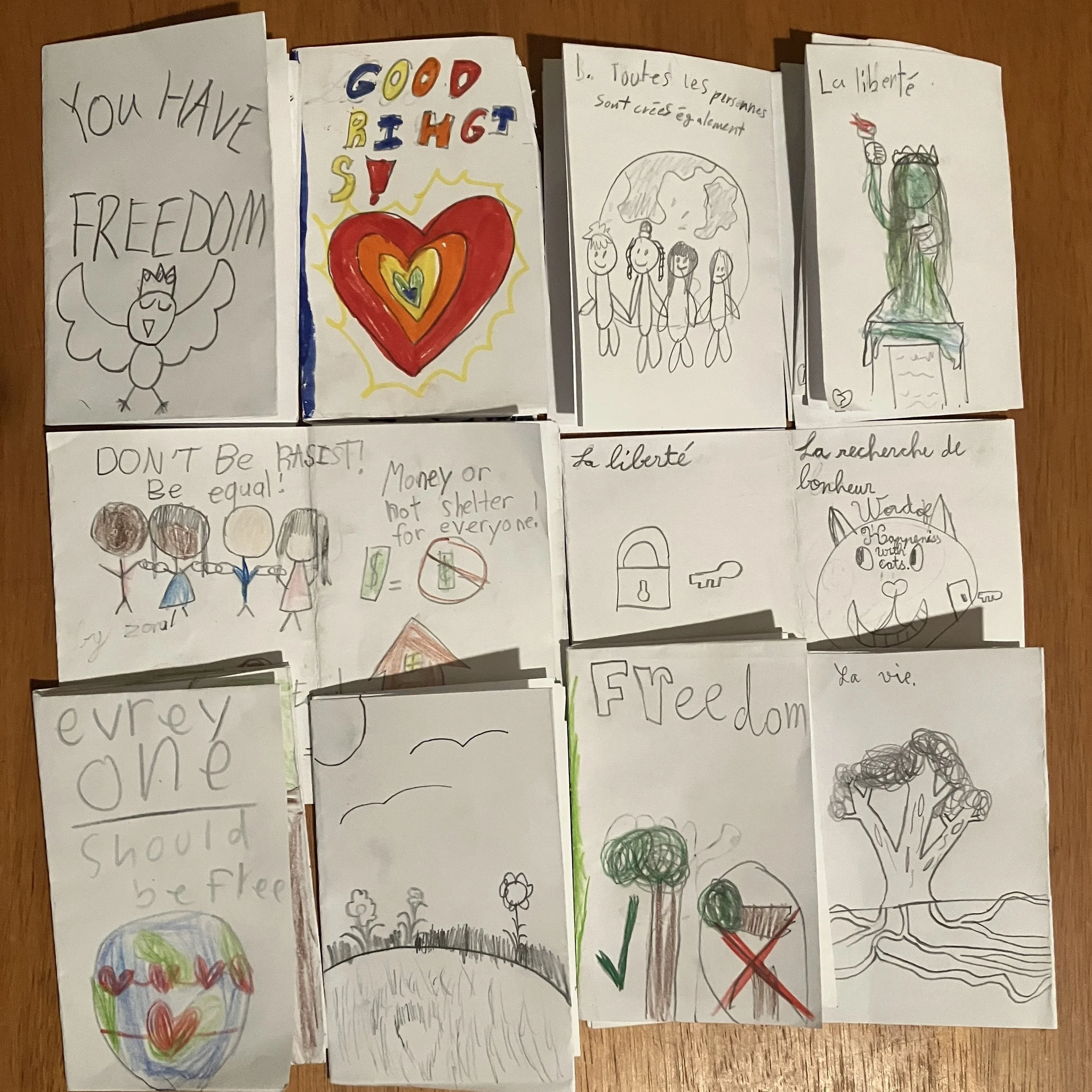
Zines designed by 3rd Grade Students at Audubon Uptown
Madame Emily’s 3rd grade students at Audubon Uptown were able to work with these formats to delve into social studies content. We used comic conventions to explore the major events of the Revolutionary War. Each student created their own version of George Washington as a comic book character, but included identifiable characteristics like his sword and three cornered hat. Looking at artwork depicting important moments from the war and thinking about details from the students’ texts, students interpreted the historical events into comic panels using their own drawings and words to retell these key events. One student drew George Washington surfing across the Delaware River and everyone enjoyed creating a dramatic icy scene of the Continental soldiers wintering at Valley Forge. Once each panel was completed, they cut out and arranged the events in sequential order to create a timeline, gluing them into an accordion book. This served as a check for understanding and allowed students to more closely engage with these events from history.

George Washington featured in a Zine
Later in the semester, students dove into the topic of freedom by making zines that shared the important words of the Declaration of Independence and what freedom and rights they believe everyone should have. We looked at symbols for freedom and equality and brainstormed our own ideas for these big ideas. Each zine was incredibly unique, voicing what students determined as important rights: housing, health care, food, safety and fair treatment for everyone.
There are many great resources for how to create simple comics and zine with young people. Comics: Easy as ABC! The Essential Guide to Comics for Kids by Ivan Brunetti (2019) is a fun guide full of tips for creating characters and adding words to tell stories through comic panels. There’s a teacher’s guide with lesson plans that link to the Common Core standards. Author Cecelia Perez offers an easy-to-follow blog post for creating a six page zine with just printer paper and scissors. And this how-to video shows an easy way to make an accordion book. As one of Madame Emily’s students shared: “Social studies is so much more fun when we get to make books and our own art!”